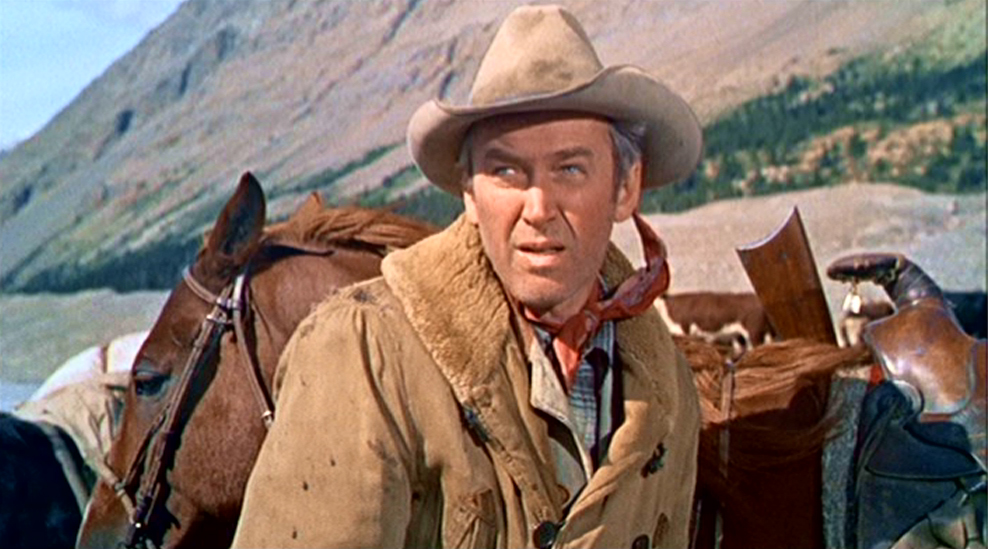
MY DARLING CLEMENTINE (Fox, 1946)

DIRECTOR: John Ford; PRODUCER: Samuel G. Engel; WRITERS: Samuel G. Engel and Winston Miller (screenplay), Sam Hellman (story), Stuart N. Lake (book); Cinematography: Joseph MacDonald
CAST: Henry Fonda, Jane Darnell, Victor Mature, Cathy Downs, Walter Brennan, Tim Holt, Ward Bond, Alan Mowbray, John Ireland, Roy Roberts, Jane Darwell, Grant Withers, J. Farrell MacDonald, Russell Simpson, Francis Ford, Fred Libby, Mickey Simpson, Charles Stevens, Harry Woods
Wyatt Earp (Henry Fonda): "Mac, you ever been in love?"
Mac (J. Farrell MacDonald): "No, I've been a bartender all my life."
 | |
| Henry Fonda is Wyatt Earp |
When Legend Becomes Fact.
If one is looking for an historical retelling of the Tombstone war, one must look elsewhere. A good place to begin would be with two biographies: Wyatt Earp: The Life Behind the Legend by Casey Tefertiller and Inventing Wyatt Earp: His Life and Many Legends by Allen Barra.
Notice that legend appears in both titles. Both writers do their best to identify what is fact and what is legend, while Hollywood has done very little of that down through the years, though the last two Earp films, TOMBSTONE (Cinergi, 1993) and WYATT EARP (WB, 1994) came much closer than any of its predecessors. (Disclosure: I have never been able to sit through an entire viewing of WYATT EARP which lasts over three hours, but seems longer. But its pretty accurate.)
And television? Well, there was an extremely popular series starring Hugh O'Brian that ran from 1955 to 1962, and its title was The Life and Legend (of course) of Wyatt Earp. Its source material is the same as that for MY DARLING CLEMENTINE, that being Stuart N. Lake's book, Wyatt Earp: Frontier Marshal.
Lake's book, supposedly a biography, is loosely (very loosely) based on fact and John Ford's movie is loosely (very loosely) based on Lake's book. See the problem? The names have not been changed, but the facts have been (to protect the guilty?).
There is an easier way to fact check CLEMENTINE If you're not ready to read the two biographies, though I certainly do recommend them. You can go here to the IMDb site for a list of the film's factual errors and you will not have to read the books and I will not have to detail the historical inaccuracies.
Director John Ford is clearly on record as being much more interested in a good story than in historical truth. As he was once quoted: "You build a legend and it becomes fact." That is what Lake did with his biography and what Ford did with the film. On another occasion Ford said: "A legend is more interesting than actual facts. When given the choice of filming the legend or the facts, I will always film the legend."
And of course there is the famous line from the newspaperman in Ford's THE MAN WHO SHOT LIBERTY VALANCE (Ford/Paramount, 1962): "This is the West, sir. When the legend becomes fact, print the legend."
Notice that legend appears in both titles. Both writers do their best to identify what is fact and what is legend, while Hollywood has done very little of that down through the years, though the last two Earp films, TOMBSTONE (Cinergi, 1993) and WYATT EARP (WB, 1994) came much closer than any of its predecessors. (Disclosure: I have never been able to sit through an entire viewing of WYATT EARP which lasts over three hours, but seems longer. But its pretty accurate.)
And television? Well, there was an extremely popular series starring Hugh O'Brian that ran from 1955 to 1962, and its title was The Life and Legend (of course) of Wyatt Earp. Its source material is the same as that for MY DARLING CLEMENTINE, that being Stuart N. Lake's book, Wyatt Earp: Frontier Marshal.
Lake's book, supposedly a biography, is loosely (very loosely) based on fact and John Ford's movie is loosely (very loosely) based on Lake's book. See the problem? The names have not been changed, but the facts have been (to protect the guilty?).
There is an easier way to fact check CLEMENTINE If you're not ready to read the two biographies, though I certainly do recommend them. You can go here to the IMDb site for a list of the film's factual errors and you will not have to read the books and I will not have to detail the historical inaccuracies.
Director John Ford is clearly on record as being much more interested in a good story than in historical truth. As he was once quoted: "You build a legend and it becomes fact." That is what Lake did with his biography and what Ford did with the film. On another occasion Ford said: "A legend is more interesting than actual facts. When given the choice of filming the legend or the facts, I will always film the legend."
And of course there is the famous line from the newspaperman in Ford's THE MAN WHO SHOT LIBERTY VALANCE (Ford/Paramount, 1962): "This is the West, sir. When the legend becomes fact, print the legend."

One last thing about the truth-stretching in the film and then we will move on.
Ford claimed that as a young man he had become acquainted with Earp who explained the famous shootout at the OK Corral to him and that he had filmed it that way with a few minor changes.
If that is true, somebody fibbed. Either Earp fibbed about what happened or Ford fibbed about filming it the way Earp described it, for what we see on the screen, though extremely well-staged, is nothing like the actual event, but much more exciting.
With all the historical inaccuracies it is still possible to sit back and enjoy this film. Despite what Ford said the film was never intended to be a history lesson.
Fonda is perfectly cast and gives a superb performance, with strong support from the rest of the cast.
It is also one of John Ford's best films, and that is saying a lot. Joseph McDonald's superb black-and-white camerawork adds an air of authenticity to both the interior and exterior filming.
 |
| Wyatt meets Clementine |
The Cast.
At this point in their respective careers, Henry Fonda had become John Ford's favorite actor, and with good reason. It was the first film for both Ford and Fonda (and Victor Mature) after military service during World War II.
Prior to the war they had teamed to film some enduring classics: YOUNG MR. LINCOLN (Fox, 1939); DRUMS ALONG THE MOHAWK (Fox, 1939); and THE GRAPES OF WRATH (Fox, 1940).
Still to come soon after CLEMENTINE were THE FUGITIVE (Argosy/RKO, 1947) and FORT APACHE (Argosy/RKO, 1948). Fonda was magnificent in all these films, but especially so in THE GRAPES OF WRATH and CLEMENTINE.
 |
| Marshal Earp and Doc Holliday |
Victor Mature, as Doc Holliday, gives what many believe is his finest performance. My only reservation is that he looked far too healthy to portray the consumptive gambler-gunfighter.
I've always wondered if the role should have gone to another actor in the film, the underrated and always interesting John Ireland, who portrays Billy Clanton. He possessed the gaunt features, angular physique, and talent to have done justice to the role.
 |
| John Henry (Doc) Holliday |
 |
| Old Man Clanton |
Walter Brennan is Old Man Clanton, the patriarch of his ranching-rustling family and the main villain in the story. Here he is not only an irascible old-timer, he is a mean, irascible old-timer, and he gives one of his best performances. Soon thereafter he would revert to his usual role as irascible, but harmless, old-timer sidekick type in films such as RED RIVER (UA, 1948), THE FAR COUNTRY (Universal, 1955) and RIO BRAVO (WB, 1959). He would also parody his Old Man Clanton role to marvelous effect as Pa Danby in SUPPORT YOUR LOCAL SHERIFF (UA, 1969).
"Wide-awake, wide-open town, Tombstone. You can get anything you want there." -- Old Man Clanton
Ford objected to the casting of Linda Darnell in the role of Chihuhua, Holliday's Latin girlfriend, but the studio was attempting to develop her into a major star and insisted that she be given the role. It is an important character, though entirely fictitious, and Ford was correct in his assessment. She would go on to do some good work in a few films, but she was miscast in this one.
 |
| the beautiful Chihuahua |
CLEMENTINE (Cathy Downs): "I love your town in the morning, Marshal. The air is so clean and clear -- the scent of desert flower."
WYATT (Henry Fonda): "That's me -- barber."
 |
| Wyatt and Clementine (Notice the tombstone. Wyatt had a brother named James and one named Warren, but none named James Warren. In the movie the Earp brothers are peaceful cowboys driving a cattle herd. One night near Tombstone their herd is stampeded and James is killed. The Earps discover that it is the Clantons who were responsible. This leads to the blood feud between the two families. None of this actually happened. There was a blood feud, but it was not caused by the above, which was a product of the screenwriters' imagination.) |
Cathy Downs, a contract player at Fox, was given the role of the title character. It was only the second credited role in her career and, as it turned out, the high-point. She would go on to star in B-movies, including sci-fi films in the 50's, and then concentrate on television for the remainder of her career.
Wyatt's brothers, Morgan and Virgil, are portrayed by Ward Bond and Tim Holt. Beginning with this film Bond would become an important member of the Ford stock company.
Holt, also returning from the war, was a popular B-cowboy at RKO for many years. He sometimes took supporting roles in major productions, but would always return to the saddle and during the postwar years would star in some of the best B-Westerns ever made. He was an excellent horseman and from an early age a champion polo player.
 |
| Chihuahua and a playful Wyatt You can watch MY DARLING CLEMENTINE on YouTube. |
******
REVIEWS
"Full of wonderful details and vignettes; exquisitely photographed by Joseph P. MacDonald. One of director Ford's finest films." -- Leonard Maltin
"One of the greatest movie Westerns...hardly the most accurate film version of the Wyatt Earp legend, but it still is one of the most entertaining." -- Bosley Crowther in The New York Times
"[It] was easily one of Ford's best Westerns, its simplicity and beauty weakened only by an untypical and excessive number of closeups of Linda Darnell. MY DARLING CLEMENTINE is quite certainly the best of all the Wyatt Earp films." -- William K. Everson in A Pictorial History of the Western Film
"The character of Wyatt Earp...was Fonda's best performance and creation." -- Andrew Sinclair in John Ford
"It's a great legendary myth. Fonda quietly imbues the Earp character with stunning power. And Ford's visual images...while not spectactularly scenic...could be hung as fine paintings....Lyrical, introspective, dreamlike; one of the most beautiful films directed by John Ford, with Henry Fonda fixing foursquarely the mythic image of Wyatt Earp." -- Brian Garfield in Western Films: A Complete Guide
 |
| Wyatt Earp |
Wyatt Earp in the movies:
 |
| George O'Brien (1934) |
 |
| Randolph Scott (l939) |
 |
| Richard Dix (l942) |
 |
| Henry Fonda (1946) |
 |
| Will Geer (1950) |
 |
| Joel McCrea (1955) |
 |
| Hugh O'Brian (1955-1962) |
 |
| Burt Lancaster (1957) |
 |
| James Stewart (1964) |
 |
| James Garner (1967) |
 |
| Harris Yulin (1971) |
 |
| James Garner (1988) |
 |
| Kurt Russell (1993) |
 |
| Kevin Costner (1994) |